
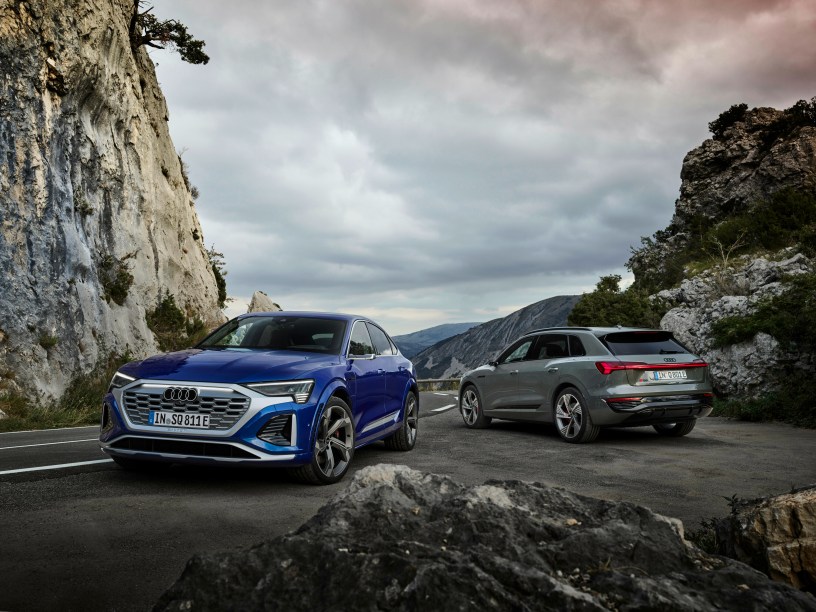
The e-tron, introduced for the 2019 model year heralded a new era for Audi, so much so that it eschewed the typical Audi nomenclature and took the name of Audi’s electric signifier ‘e-tron’ that was intended to be appended to erstwhile nomenclature such as the case with the A3 e-tron. Later it was followed by the Taycan twin supersedan the e-tron GT.

Perhaps predictably, this led to confusion around the e-tron SUV’s place in Audi’s lineup. After accounting for federal tax, the e-tron SUV was priced right on top of the similarly sized but slightly larger Audi Q8 SUV. Let’s quickly do the math: 2019 Audi Q8 in base Premium trim started at $68,395, while the 2019 e-tron in base Premium Plus started at $75,795 or $68,295 after tax credit or $100 below the Q8. Both the size and price comparisons are important, so we’ll return to that.

First, let’s quickly review Audi trim hierarchy: Premium, Premium Plus & Prestige are the three core Audi trim levels applied to nearly every model in the Audi lineup. Some models are available in all three while lower end models may only be available in the first two, higher one end ones (such as the S-cars) only in the higher two. Given that the e-tron was Premium Plus trim priced just below the Q8 Premium and also consider that it is slightly smaller, that would seem indicate that the e-tron fell just below the Q8 in the ladder of Audi SUVs.
But that wasn’t the only issue, in the EV timeline 2019 was ages ago. While EV sales share of total vehicle sales is pacing at around 6% today, back in 2019, they were closer to 1.4%. In some regions or states in the US (like CA which accounts for about 42% of the nation’s EVs by registration), EVs today are hard to get, have long waitlists or huge markups. But back in 2019, EVs weren’t the obvious choice they are today with fuel price volatility, easier access to EV charging and a plethora of EV offerings. The e-tron had slow sales in its first few years on the market and consequently saw price cuts, large incentives and discounting.
For 2021, Audi cut e-tron prices and introduced a lower spec Premium trim, bringing the base price down to $66,995 or $11,400 less than the 2020 e-tron Premium Plus. After federal tax credit, the e-tron dropped under $60k, at $59,495. Meanwhile, the 2020 Audi Q8 started at $69,295 or $9,800 higher. Now are you starting to see the relative positioning of the two models? But that wasn’t all, large lease incentives including subvented residual value, subvented money factor and lease case conspired to bring ultra-aggressive e-tron lease offers, culminating in the great e-tron sales boom of March 2021. Lease offers of under $500/mo and even $400/mo were not uncommon. And as a reminder, that is for an SUV that on paper has a retail price of about $70k.
But something interesting happened thereafter, Audi doused the firesale on the e-tron, cut back overproduction and along the way, demand started to lift given the macroeconomic changes detailed earlier. Suddenly, new e-trons were selling for at or above MSRP. And previous distressed sale e-trons had equity in the 5-digit range. One example is detailed by our friends over at Carsplain. The e-tron was back in vogue, a comeback that in football would have lead to documentaries and shared tales in pubs for years to come.
Along the way, Audi introduced the Volkswagen ID.4-based Audi Q4 e-tron, a vehicle in high demand with long waitlists (also due in part to it’s long delay getting to the US market), which saw its base price increased by thousands of dollars to right about $50k. Audi also solidified its plans to go full EV across the lineup by 2026. So then the need to bring the e-tron back in line with the nomenclature of all other Audis started to become more urgent. Given the comparisons to the Audi Q8, the natural choice would have been to rename the e-tron to the Audi Q6 e-tron.

Which brings us to the China-market only Audi Q6 3-row SUV. First let’s circle back to the concept that larger vehicles sit higher up in the hierarchy. It is typically true and the Q7 is larger than the Q5 which is larger than the Q3. Likewise, the A8 is larger than the A6 which is larger than the A4 which is larger than the A3. But the Q8 is smaller than the Q7, but it is intended to be ‘more premium.’ Same goes for A5 vs A4. The Audi Q6 SUV is based on the Volkswagen Atlas and is slightly larger than the Q7, but is certainly less premium. But this vehicle is not planned to be sold outside of the Chinese market, so while re-naming the e-tron as the Q6 e-tron would not be a perfect solve, any confusion would be limited to the Chinese market.

Instead, by choosing to name it the Q8 e-tron, Audi is reasserting the e-tron’s position right on top of or even above the existing Audi Q8. This means, with or without tax incentives (and do note that the Inflation Reduction Act eliminated tax credits for EVs built outside NAFTA, so the e-tron lost eligibility as of August 16th), don’t expect any price cuts on or lower end versions of the e-tron… err, Q8 e-tron. The Q8 e-tron is now positioned above the Q7 and at parity with the Q8. Like the gas Q8, it has an S variant (formerly e-tron S, now SQ8 e-tron), but like the Q7, it does not offer an RS variant. Could that now change?
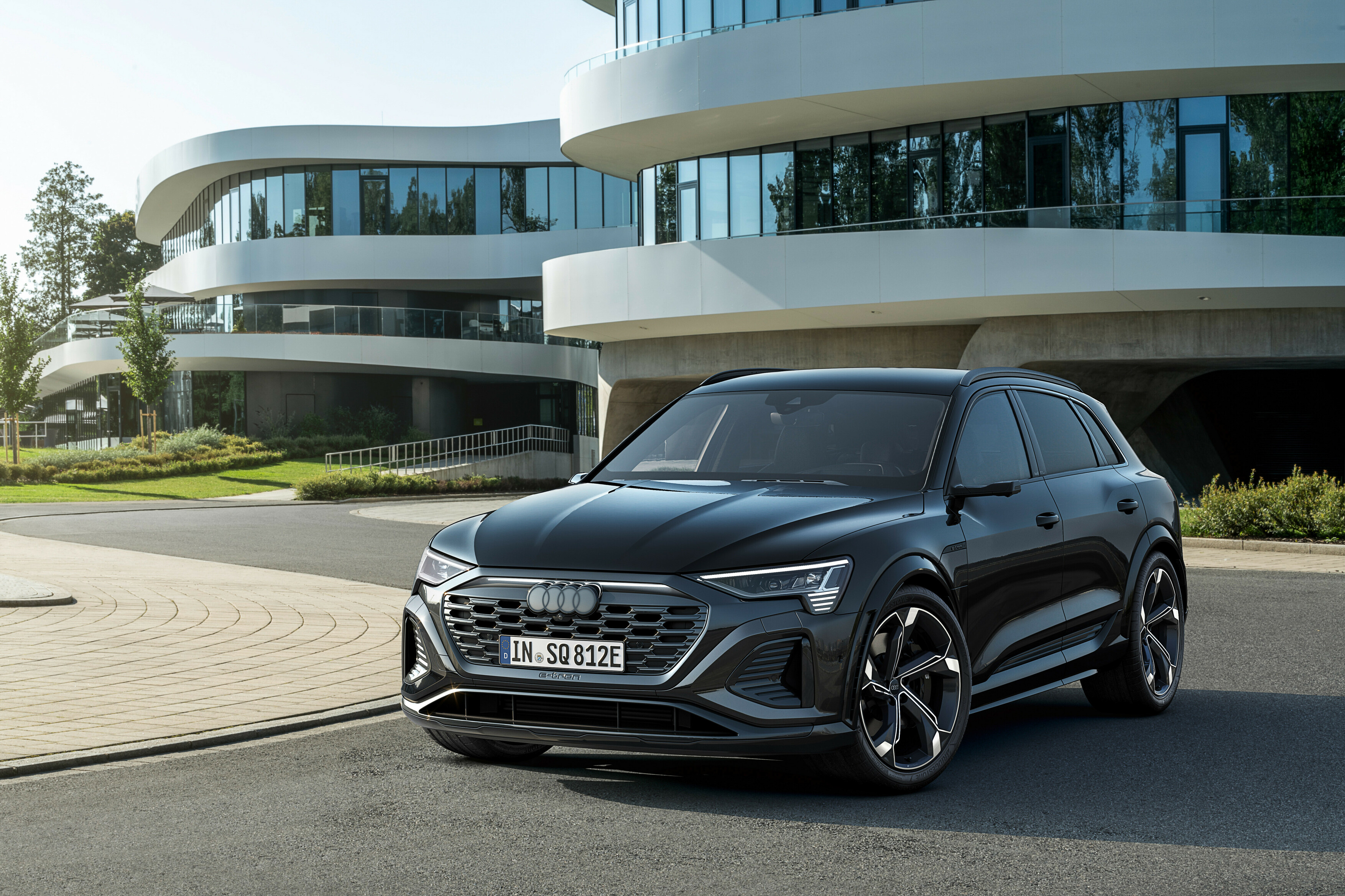
Irregardless of the Atlas-based China-market Q6, this likely means Audi plans for an Q6 e-tron electric SUV to slot between the Q4 e-tron and Q8 e-tron. Spyshots of just such a vehicle have been circulating on the internet. Until now, it was expected to be the replacement for the e-tron, now it appears it will be the junior sibling. And once it’s introduced, it is possible Audi further pushes the Q8 e-tron upmarket to put more distance between it and the Q6 e-tron.
And what of the gas Q8? Well there’s no reason it cannot continue to live alongside the Q8 e-tron… for some time anyway. More than a few automakers are planning for separate gas and EV models that co-exist in the same category in this awkward transition phase to an EV-only future. After all, Mercedes has a complete, separate EV lineup coexisting alongside the E-Class, S-Class, GLE & GLS (EQE, EQS, EQE SUV & EQS SUV, respectively) in addition to EV versions of other models like the GLA, GLB, G-Class, etc. Audi itself is planning an A6 e-tron, an entirely separate model that will live alongside the gas A6. But with Audi planning to discontinue introducing new gas models in just 3 model years from now, the current gas Q8 will not be likely to see a replacement. Audi has further said it will cease production of any gas model by 2033.

With the 2024’s larger 106kWh battery promising near 300 miles of range (up from 222) and 170-kW fast charging capability, the Q8 e-tron may finally make EV ownership worth the leap for Q8 gas intenders. Audi seems to be placing a bet that it now will.
 The Autolytic