

The market has been steadily shifting in favor of Sport Utility Vehicles (SUVs) or trucks and away from cars for quite some time now. In the early 2010s, SUV plus truck mix hovered just over 50% of retail sales but by late 2021, that number climbed up to just under 80% and continues to hold at about that level through August 2022 according to J.D. Power data. Put another way, cars have declined in share from about 50% to about 20%, a major decline over the last decade.
There are numerous reasons for this shift, but mostly it boils down to consumer preference as well as automakers’ responsiveness to that preference. Let’s start with the former; why do consumers prefer SUVs to cars? There’s the list of practical reasons: higher ride height for a better view, all-weather capability in the snowbelt, more cargo space. But it’s more than just those attributes, SUVs have, since the 90s, really hit automotive zeitgeist and seemingly never lost it. Popularity for wagons, minivans, hatchbacks & coupes have come and gone over the decades, but somehow SUVs have never stopped being en vogue. Mostly body on frame vehicles in the 1980s and early 1990s, these truck-like rigs began to become more suited for on-road use with the introduction of several vehicles:
- 1984 Jeep Cherokee – arguably the SUV that started the trend
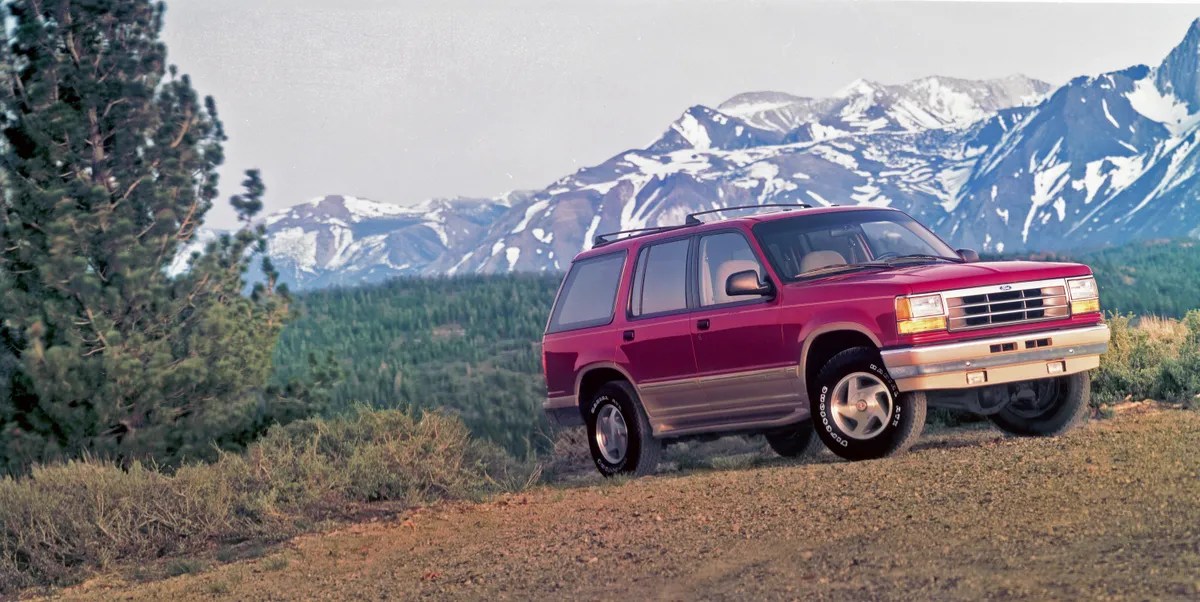
- 1991 Ford Explorer – the SUV that popularized the trend
- 1994 Toyota RAV4 – first of the car-like, car-based smaller SUVs
- 1997 Lincoln Navigator – while not the first luxury SUV, it was the first differentiated one as the 1995 Acura SLX, 1996 Lexus LX450 were little more than badge swaps and of course the Range Rover or Jeep Wagoneer long pre-date it or anything else on this list
- 1999 Lexus RX – first of the carlike, car-based luxury SUVs
SUVs have always had higher perceived value. High-priced mainstream branded SUVs like the Toyota Land Cruiser, GMC Yukon, Nissan Armada and others have had no problem commanding prices that far outstripp the highest, most opulent mainstream sedans could ever touch. With the exception of the rare mainstream branded sports car (Chevrolet Corvette, Nissan GT-R), there is a very clear distinction between the prices cars and SUVs can achieve.
Given that, it’s no surprised that automakers are able to ask higher prices for SUVs based on the same platform as a comparable car. The Honda CR-V since its inception has been based on the Civic platform, yet its $28,045 base price is 19% higher than the Civic’s $23,645 base price. And yet, the CR-V is still able to outsell the Civic by 74%. So why wouldn’t an automaker devote limited development and marketing dollars to more and more SUVs and less and less cars? Consider the following: the same platform that spawned the Audi A4 also gave us the A5 and Q5. From the car side, Audi has developed the following body styles: sedan (A4), coupe (A5), convertible (A5 cabriolet), hatchback (A5 Sportback) and wagon (A4 allroad). From the SUV, just two: SUV (Q5) and SUV-coupe (Q5 Sportback). Yet those 2 SUV body types together sold 81% more units than the 5 cars combined in the US in 2021. While not every incremental body type costs the same to develop, the simple math is 40% as much engineering and yet 81% more sales.
While it’s clear that the trend toward SUVs is unlikely to stop with more SUVs than cars on the horizon and even reports of several high profile cars such as the Hyundai Sonata likely to be cancelled after the current generation, there are additional forces conspiring to push automakers to tilt the game further in favor of SUVs.
Starting with the Inflation Reduction Act and its additional conditions around vehicle eligibility. Outside of the North American assembly, mineral component and battery production requirements, there is a newly introduced cap on vehicle retail price or MSRP. The controversial element is that the cap is lower for cars than it is for SUVs or trucks. The cap is set at $55,000 for cars but $80,000 for SUVs or trucks. And while some provisions of the law do not take effect until 2023 including the MSRP cap along with the income cap of $150,000 for individuals and $300,000 for families, this change will have an immediate effect on future product plans for automakers.
Most EVs start over $40,000, with only a few older models like the Nissan LEAF, Chevrolet Bolt EV/EUV or Hyundai Kona Electric starting meaningfully below that mark. For any automaker planning a vehicle starting in the mid-$40k range, there isn’t much headroom to the MSRP cap of $55k for cars to build a profitable EV before your model suddenly becomes $7,500 more expensive to a consumer. So as an automaker, the clear answer is to build a more popular SUV with plenty of cushion to offer higher trims, larger batteries, more options and faster variants before you run into the $80k cap for EV SUVs.
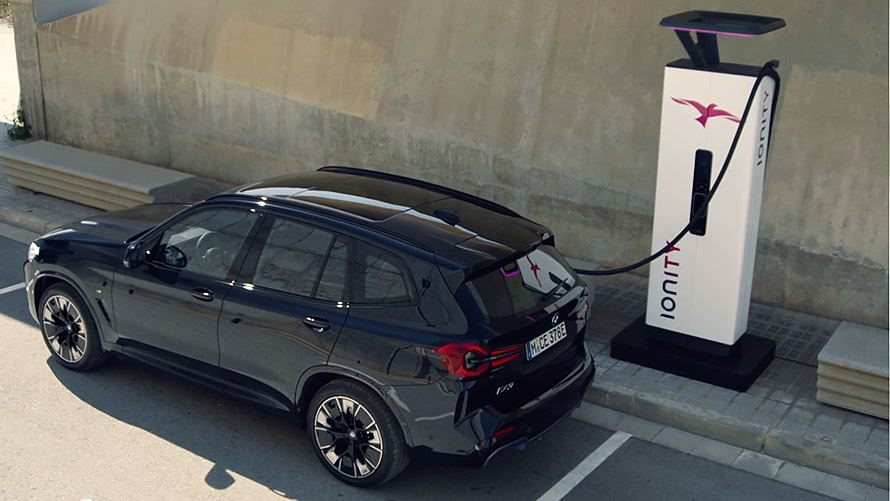
Granted this isn’t likely to mean vehicles like the Porsche Taycan whose buyers presumably are earning well in excess of the coming income eligibility cap, would be effected. But consider a $67,440 Tesla Model Y Long Range versus a $59,440 Model 3 Long Range (note: this model is currently not available to order), the former is eligible for the credit, the latter is not. The Model Y has traditionally been priced at $7k to $12k more than an equivalent Model 3, but under the new rules, that Long Range variants would be priced pretty close to parity with Tesla collecting $8,000 more revenue per Model Y versus a Model 3. Given limited production capacity, which would you prioritize if you were Tesla? This may be why BMW has plans to introduce a lower cost variant of the BMW i4, the eDrive 35 which starts at $52,395 or $4,500 below the current base eDrive 40 model. Though until BMW intends to move production to North America, the i4 would remain ineligible. Could BMW bring the iX3 EV (currently on sale in the UK and EU) to our market and build it in the South Carolina instead? Notably, it does start about 19% higher in the UK market, meaning like the aforementioned Tesla models, it could mean higher revenue for its automaker, with a comparable price for consumers after the tax credit is accounted for.
If that’s not enough to spell trouble for the future of the ‘car’, the Insurance Institute for Highway Safety (IIHS) has introduced a more difficult side impact crash test protocol for cars. Designed to better reflect the high number of SUVs and pickup trucks on American roads, the barrier increase weight from 3,300lbs to 4,200lbs and increase speed from 31 mph to 37 mph. According to IIHS between these two changes, crash energy increases by 82%. Other changes effectively strike the vehicle higher, more like an SUV than a car broadsiding the car being tested. This effectively disadvantages cars that ride lower versus equivalent SUVs or as IIHS President David Harkey puts it, “With vehicles that sit lower to the ground, the striking barrier hits higher on the door panel. That potentially puts sedans and wagons at a disadvantage in this evaluation but reflects what happens in a real-world crash when these vehicles are struck by a higher-riding pickup or SUV.” While automakers have traditionally been very responsive to IIHS testing results and enhanced vehicle structure in subsequent refreshes and redesigns, it would be difficult to envision that this new test wouldn’t motivate automakers to further shift future product plans towards higher riding vehicles like SUVs.

While any one of the above trends would only continue the trend away from cars toward SUVs and trucks, together each of these above effects only serve to accelerate it. Ten years ago, cars were 1 in 2 vehicles sold, today they are 1 in 5. By 2030, could even 1 in 10 end up being a high water mark?
 The Autolytic